







Sky Spectacle Ahead: NASA Predicts a Rare Six-Minute Total Solar Eclipse on August 2
Mark your calendars and ready your eclipse glasses—a celestial marvel is set to grace the skies on August 2, and it’s not just another eclipse. According to NASA, this will be one of the longest total solar eclipses in recent memory, offering nearly six full minutes of totality—a rare and awe-inspiring astronomical event that promises to captivate stargazers around the world.
What Makes This Eclipse So Special?
Unlike typical solar eclipses that last just a couple of minutes, this upcoming event will offer a prolonged moment of total darkness as the Moon completely covers the Sun, turning day briefly into night. NASA scientists say this eclipse stands out because of its extraordinary duration, optimal positioning, and clear visibility along several key geographical regions.
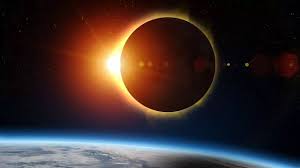
During the six minutes of totality, observers in the eclipse’s path will witness dramatic shifts: temperatures will drop, stars may become visible, and the solar corona—the outermost layer of the Sun’s atmosphere—will glow around the darkened disk. This unique opportunity to study the Sun’s corona has researchers especially excited.
NASA’s Insights: A Closer Look at the August 2 Eclipse
NASA has been closely monitoring the eclipse trajectory and has confirmed that parts of the Southern Hemisphere, particularly areas of South America, the South Pacific, and parts of Antarctica, will experience the full spectacle of totality. However, partial views will be visible across a much wider region, depending on local time and weather conditions.
For NASA, this eclipse also serves as a scientific goldmine. The space agency will use balloon launches, satellite imagery, and high-altitude aircraft to capture valuable data on solar radiation, atmospheric conditions, and electromagnetic activity during the blackout period. These insights could improve our understanding of solar storms and help protect satellites and power grids from future disruptions.
A Guide for Skywatchers: How to Safely Enjoy the Eclipse
If you’re planning to witness the solar eclipse, preparation is essential. NASA strongly advises the use of ISO-certified solar viewing glasses to prevent eye damage. Never look directly at the Sun, even during a partial eclipse, without proper protection. Telescopes, binoculars, or cameras must also be equipped with solar filters.
For those unable to travel to the path of totality, NASA will offer a live stream of the entire event, complete with expert commentary and visuals from multiple vantage points across the globe. This digital coverage ensures that no one misses out on the cosmic wonder, even from thousands of miles away.
Why Eclipses Fascinate Us: A Cosmic Connection
Solar eclipses have captivated human imagination for centuries. Ancient civilizations viewed them as powerful omens, while today’s astronomers see them as rare opportunities for discovery. This August 2 event is not just about science or spectacle—it’s a reminder of our planet’s intimate dance with the cosmos.
The predictability and beauty of a solar eclipse highlight our ongoing connection to the natural world and the universe beyond. As we stand under the shadow of the Moon, even for just six minutes, we’re reminded of the vastness of space and the delicate mechanics that keep our solar system in balance.
Final Thoughts: Don’t Miss This Celestial Masterpiece
Whether you’re an astronomy enthusiast, a casual observer, or someone looking to witness a once-in-a-decade phenomenon, the August 2 total solar eclipse is not to be missed. With NASA’s predictions and live coverage ensuring global accessibility, this is your chance to experience the magic of a sky that suddenly goes dark—and then lights up again with the brilliance of understanding.
Get your viewing gear ready, check the local eclipse timings, and prepare for six unforgettable minutes of cosmic wonder.