


Space Science Reviews Publishes TRACERS Article Collection: A Major Step for Space Weather Research
In a significant development for the space science community, Space Science Reviews, a leading international journal in the field of astrophysics and space research, has published a comprehensive article collection dedicated to the TRACERS mission. This special issue highlights the latest findings, goals, instrumentation, and scientific approach behind TRACERS (Tandem Reconnection and Cusp Electrodynamics Reconnaissance Satellites)—an innovative mission that aims to unravel the complex mysteries of magnetic reconnection and space weather dynamics near Earth’s polar regions.
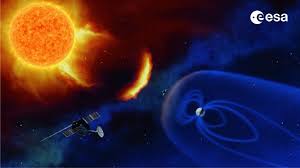
The TRACERS mission, scheduled to launch in 2025 under NASA’s Heliophysics Explorers Program, involves a pair of identical spacecraft that will fly in formation through Earth’s northern magnetic cusp—a key region where the planet’s magnetic field interacts with the solar wind. This area is crucial for understanding how energy and particles from the Sun are transferred into Earth’s magnetosphere, ultimately influencing everything from auroras to disruptions in communication satellites and GPS signals.
Now, with the dedicated TRACERS article collection officially available, researchers and students alike can dive into detailed scientific papers that outline the mission’s objectives, theoretical models, expected data collection strategies, and the technological design of the instruments onboard. The collection brings together contributions from leading scientists and engineers involved in the mission, including insights into the magnetometers, particle detectors, and electric field sensors that will be used to study particle motion, electromagnetic waves, and energy transfer during magnetic reconnection events.
This collection is more than just a scientific milestone—it’s a clear signal that TRACERS is entering an advanced stage of development and gaining recognition within the global research community. By publishing this issue, Space Science Reviews not only elevates the visibility of TRACERS but also invites the broader scientific community to engage, contribute, and collaborate as the mission moves toward its launch window.
According to mission scientists, TRACERS is designed to answer longstanding questions about how magnetic reconnection—a process where magnetic field lines from different magnetic domains collide and reconfigure—impacts the near-Earth environment. It’s a process that plays a crucial role in solar flares and geomagnetic storms, yet remains poorly understood in many aspects. With high-resolution, simultaneous measurements from two coordinated spacecraft, TRACERS aims to provide unprecedented data that could help predict space weather with greater accuracy.
The TRACERS article collection also delves into the mission architecture, detailing how the two satellites will maintain tight formation flying and how their orbits have been optimized to ensure maximum exposure to magnetic cusp regions. The inclusion of case studies, simulations, and laboratory tests offers readers a deep understanding of how the mission will operate in real-world space conditions.
NASA, the University of Iowa (the mission’s lead institution), and its multiple partners across the U.S. have expressed pride in seeing the mission featured in such a prestigious journal. The publication serves as a bridge between the engineering phase and the scientific exploration phase, reinforcing TRACERS’ role in the future of heliophysics.
Researchers worldwide are already exploring opportunities to integrate TRACERS data into their studies once the mission becomes operational. Universities, international research institutions, and even private aerospace companies are keen to use its high-resolution datasets for a wide range of applications—from modeling auroral activity to enhancing satellite shielding technology.
the Space Science Reviews’ TRACERS article collection marks a critical step forward for the mission and the broader scientific quest to understand space weather phenomena. As we move closer to launch, the global space science community eagerly anticipates the insights that TRACERS will bring—insights that could shape the future of space weather forecasting, satellite safety, and our understanding of Sun-Earth interactions.